




About Orb Farm
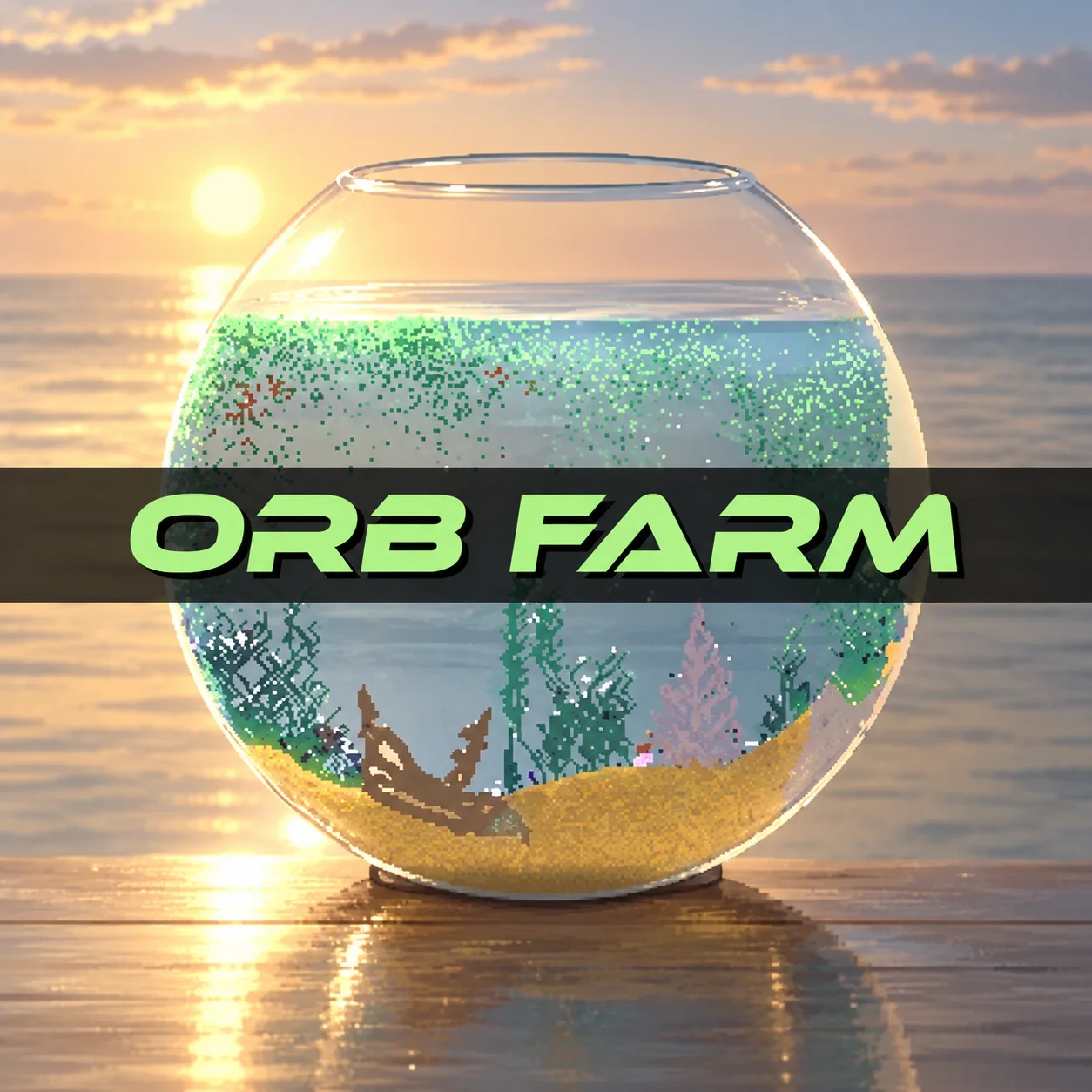
Orb Farm, officially styled as Orb.Farm, is an experimental ecosystem simulator created by Max Bittker. Rather than asking you to earn points or complete levels, it gives you an empty glass sphere and a collection of materials with which to create a miniature aquatic world.
You can add sand, stone, wood, water, algae, grass, bacteria, daphnia, fish, and other unusual elements. Every material follows its own rules, creating interactions that resemble a simplified natural ecosystem.
Plants and algae use light and carbon dioxide while producing oxygen. Small organisms consume available food, and larger creatures depend on both those organisms and a healthy environment. If one part of the system grows too quickly or disappears, the entire ecosystem can change.
There is no fixed victory screen. Your goal is to experiment, observe the simulation, and discover combinations that produce a stable environment. A successful orb may continue evolving with very little intervention, while an unbalanced one can experience oxygen shortages, population crashes, or excessive algae growth.
Orb Farm runs directly in a web browser and uses pixel-based falling-sand simulation. Each grain of sand, drop of water, and living particle contributes to the behavior of the miniature world.
How to Play Orb Farm Online
- Begin by selecting a solid material such as sand or stone. Click and drag inside the empty sphere to create a foundation at the bottom.
- Add water until the aquatic area reaches the desired level. Leaving some air above the water creates a visible surface and gives the ecosystem room for gas exchange.
- Introduce algae, grass, bacteria, or other producers before adding larger animals. Allow this early plant life to spread and begin generating oxygen.
- Next, add a small population of daphnia or similar organisms. These creatures can feed on available biological material and become part of the food chain for fish.
- Add fish only after the orb shows signs of stability. Introducing too many animals before enough food and oxygen exist can cause the population to die quickly.
- Observe the oxygen and carbon dioxide indicators along with visible changes inside the sphere. Adjust the environment gradually, wait for the simulation to respond, and rebuild any part of the habitat that becomes unstable.
Controls
Orb Farm uses mouse-based sandbox controls.
The keyboard is not required. Use short clicks for precise placement and slow dragging when shaping the substrate or filling the orb with water.
Materials, Organisms, and Ecosystem Balance
Orb Farm contains several categories of elements that interact over time.
The most important relationship is between producers and consumers. Plants and algae support animal life, while animals consume oxygen and produce waste that other parts of the ecosystem must process.
A visually crowded orb is not necessarily healthy. A smaller population with stable gas levels may survive longer than a tank filled with too many organisms.
Beginner Tips for Orb Farm
- Build the physical habitat before adding living creatures. Begin with sand, stone, water, and a small amount of wood.
- Leave an air gap above the water instead of filling the entire sphere.
- Introduce algae and plants first. They need time to establish the oxygen and food supply required by animals.
- Add daphnia before fish. Small organisms can help develop a functioning food chain.
- Begin with only one or two fish. A small stable population is easier to support than a crowded tank.
- Watch oxygen and carbon dioxide rather than judging the orb only by appearance.
- Make one adjustment at a time. Several simultaneous changes make it difficult to identify what caused the result.
- Let the simulation run. Important biological changes often take longer than the initial construction of the habitat.
Advanced Ecosystem Strategy
Create several microhabitats inside the sphere. Shape the sand into deep and shallow sections, add protected areas around stone or wood, and leave open water for fish movement.
Build a strong producer base before increasing the animal population. Healthy algae and plants should be clearly established before you add organisms that consume large amounts of oxygen.
Observe population trends rather than isolated events. One dead organism does not always mean the ecosystem is collapsing, but repeated deaths combined with falling oxygen indicate a larger problem.
Avoid responding to every fluctuation immediately. Biological systems naturally rise and fall. Give the orb time to settle before making another intervention.
When diagnosing a collapse, work backward through the food chain. Fish deaths may result from low oxygen or insufficient prey. A declining daphnia population may indicate inadequate food. Weak plant growth may point to unsuitable light, heat, water depth, or substrate.
Create separate test orbs with one major difference between them. For example, change the light level while keeping the organisms similar. Comparing the results makes the simulator useful as a simple virtual ecology experiment.
FAQ
Is Orb Farm free to play?
Yes. Orb.Farm can be played for free directly in a compatible web browser.
Do I need to download Orb Farm?
No. The simulator runs on the web without requiring a traditional installation or account.
Who created Orb Farm?
Orb.Farm was created by developer and digital artist Max Bittker.
Is there a final level or victory condition?
No. Orb Farm is an open-ended sandbox. The main challenge is creating a stable ecosystem and observing how it changes over time.
Why do my fish die?
The most common causes are low oxygen, insufficient food, excessive heat, or adding too many fish before the plants and smaller organisms are established.
What should I add first?
Start with sand or another substrate, then water, algae, plants, and bacteria. Introduce small animals before adding fish.
What are daphnia?
Daphnia are tiny aquatic organisms. In the simulation, they form part of the food web and can provide food for larger creatures.
Does Orb Farm keep changing when the tab is closed?
The live simulation primarily progresses while the page is open. Leave the tab running in the background if you want to return later and observe gradual changes.
Can I restart an unsuccessful ecosystem?
Yes. Use the available clearing or reset controls to remove the current setup and apply what you learned to a new orb.
Is Orb Farm a traditional farming game?
No. “Farm” refers to cultivating a miniature ecosystem rather than growing crops or managing livestock. It is closer to a virtual aquarium or biological sandbox.
More Games Like This
Particle Clicker

Idle Restaurants Tycoon
Idle Idle GameDev

Dalgona Candy Honeycomb Cookie

Case Clicker

Poop Clicker
Idle Zoo Safari Rescue
Idle Tree City
Idle Ants

Idle Breakout

Idle Dice